
 Return home
Return home
Return homeGet an overview of the sustainable transport hierarchy. Learn more about active travel, public transport, car sharing, personal car use and air travel and how improving it can impact your journeys and CO2 emissions.
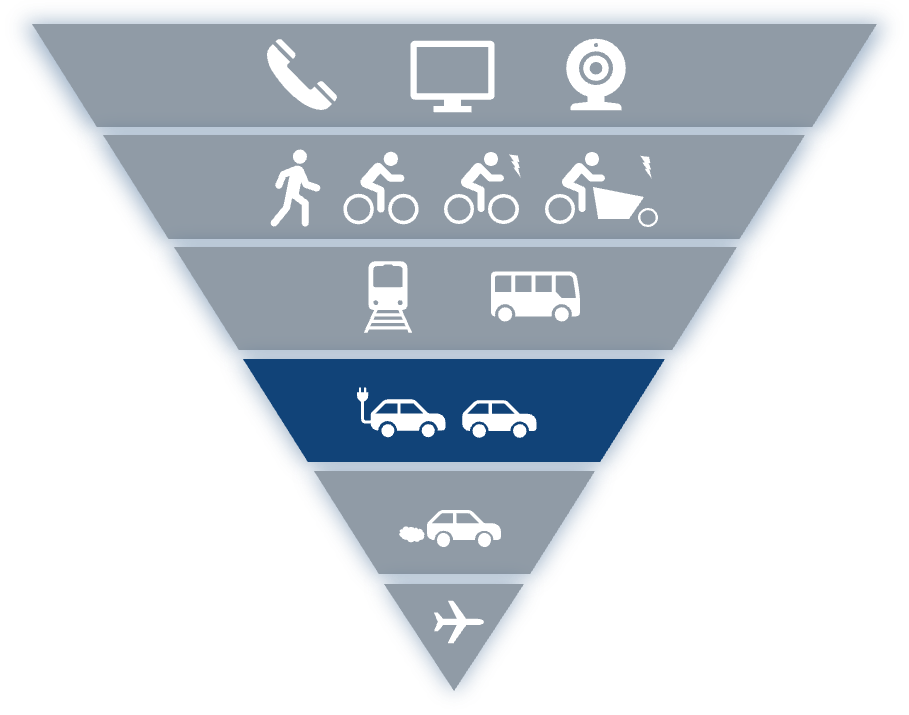
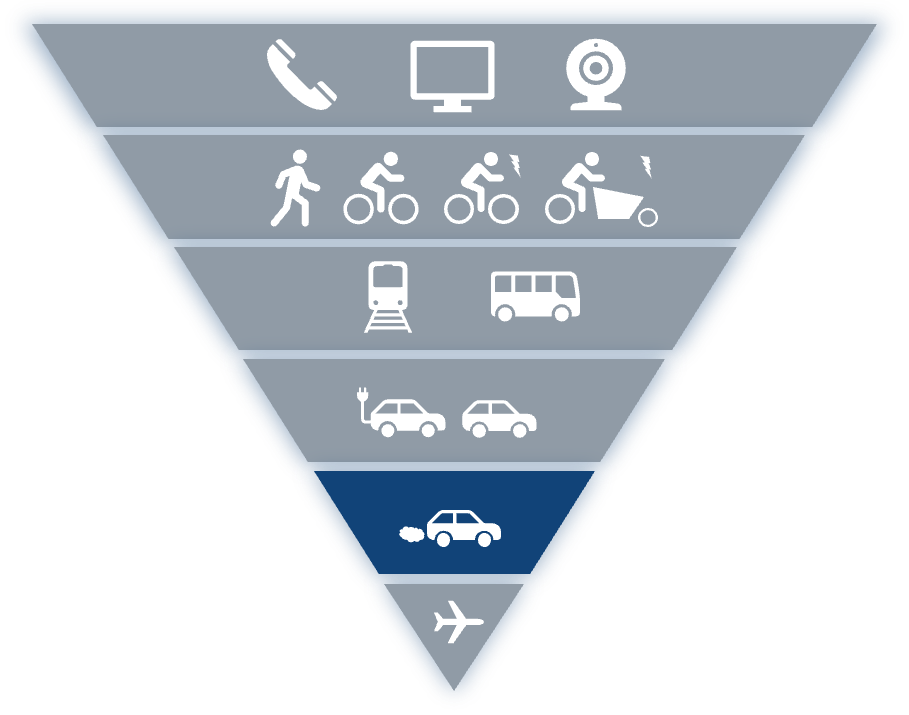
You should use sustainable transport whenever possible. As a society, we should not default to using cars for every journey.
The sustainable transport hierarchy helps guide decision-making by encouraging people to choose the most sustainable mode of transport available.
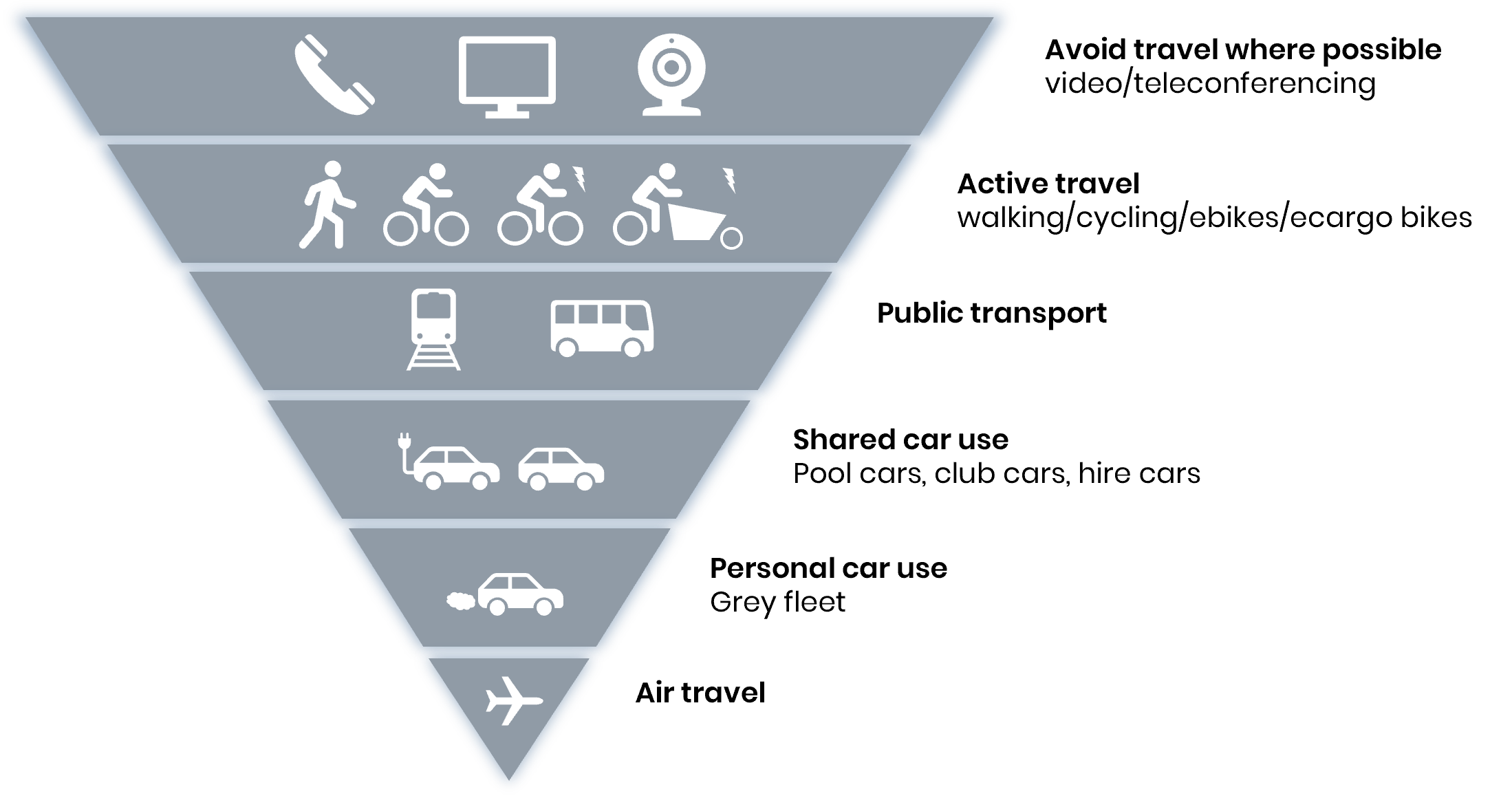
This is the simplest, most cost-effective and immediate way to reduce your CO2e emissions, improve air quality and save money.
You can reduce your carbon footprint by introducing virtual ways of working. Commuting takes time and increases your carbon footprint, even when using public transport. Virtual meetings are often more efficient, cost-effective and productive than face-to-face meetings. Introducing this way of working can benefit both your organisation and its employees.
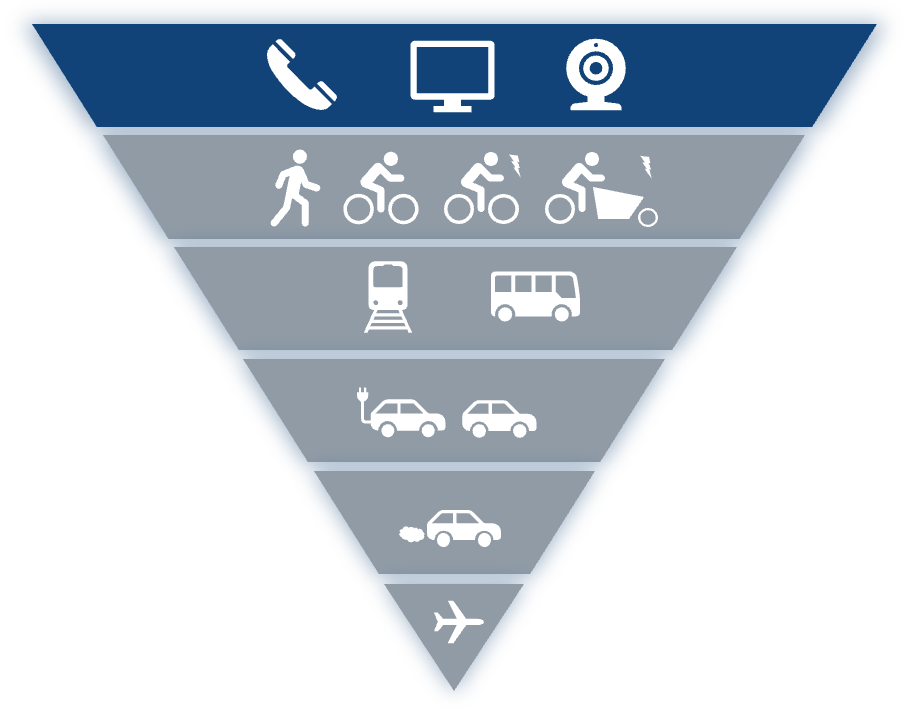
You should use active travel methods, such as walking and cycling, wherever possible. By choosing to walk or cycle instead of driving, you can help reduce air pollution and transport-related emissions.
Read more about the benefits of active travel.
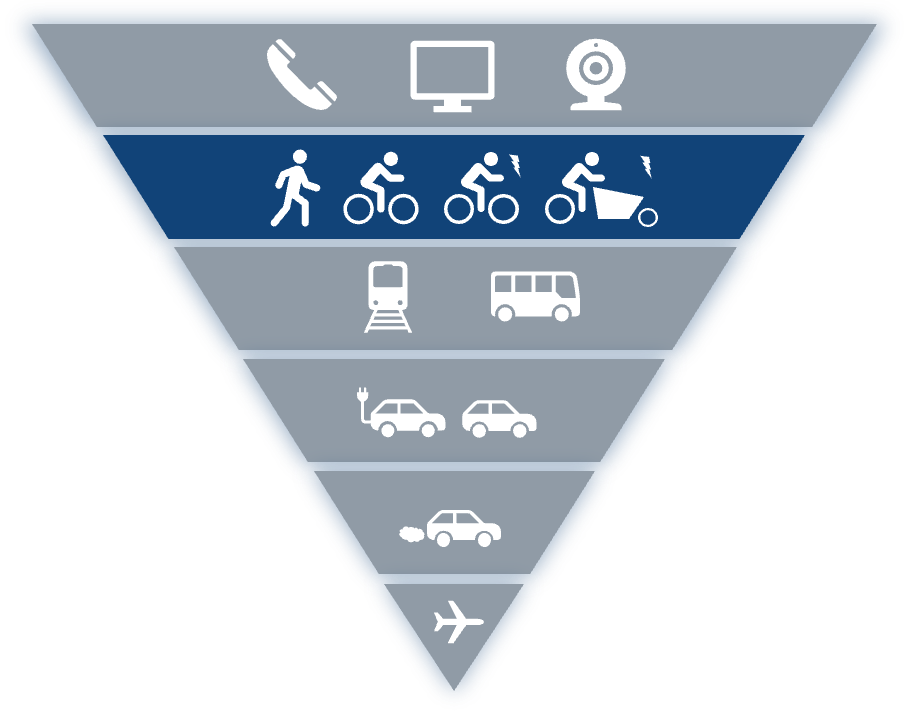
There may be times when active travel is not a suitable option. For example, you may need to travel a long distance or transport a large load. In these situations, public transport can be a more sustainable alternative. Public transport helps reduce traffic on the roads and generally produces fewer emissions per passenger mile than single-occupancy vehicles.
If staff travel by public transport, your organisation can avoid costs such as parking charges and low emission zone charges. Public transport can also reduce delays caused by traffic congestion.
To support this approach, you should have a system in place to reimburse employees for business travel by public transport. You should also encourage staff to choose public transport whenever it is a practical option.
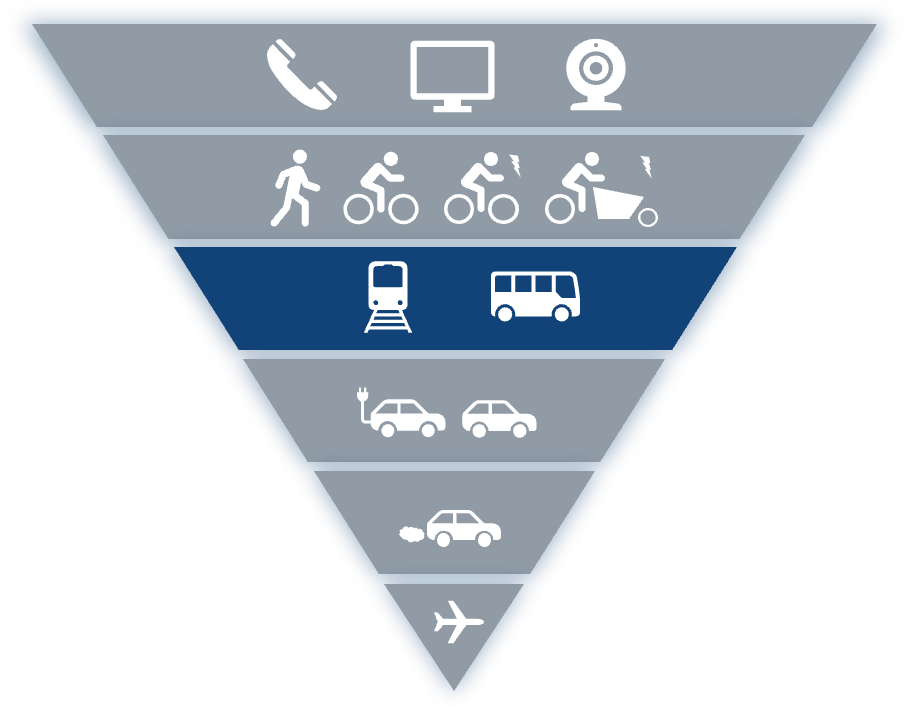
Using car-sharing schemes, pool cars, car clubs and hire cars can help reduce your CO2e emissions.
In the UK, commuting and business travel have the lowest vehicle occupancy rates, with 89% of commuting journeys and 86% of business journeys made by single-occupancy cars. This compares with 62% for all UK journeys.
CoMoUK published a comprehensive report in June 2021 as part of its Action Kit for Scottish Businesses. The report outlines the benefits of shared transport and the steps organisations can take to reduce grey fleet mileage and encourage modal shift.
Where employees need to use cars and vans, you should ensure they do so as sustainably as possible. Ideally, this should involve the use of zero emission vehicles.
Proportion of lone drivers in business travel and commuting
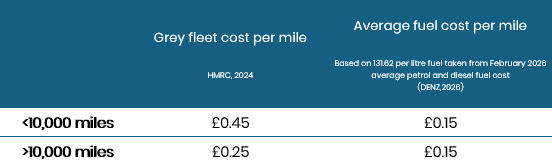
Using an employee’s own vehicle for business travel should be a last resort, as employee-owned vehicles are often older and less efficient than company fleet vehicles.
This is partly because organisations typically have limited control over vehicle age, maintenance and efficiency standards within the grey fleet. As a result, emissions may be higher than expected. If your organisation relies heavily
Grey fleet cost compared to average fuel cost
You should avoid air travel wherever possible.
Approximately 2.5% of global CO2 emissions come from aviation. However, the overall climate impact of flying is significantly greater when non-CO2 effects are taken into account, including emissions released at high altitude.
Air travel is one of the most carbon-intensive forms of transport on a per-passenger-kilometre basis. Emissions are generally higher than those from rail travel and can be comparable to or higher than those from car travel, depending on vehicle occupancy and efficiency. Aviation emissions vary considerably according to flight length, aircraft type, passenger load factor and operating conditions. Short-haul flights typically have higher emissions per kilometre than long-haul flights because take-off and climb are particularly fuel intensive.
In wealthier countries such as the UK, it is estimated that fewer than half of people fly each year and fewer than 15% fly frequently. However, before the COVID-19 pandemic, the number of people flying was increasing globally.
